
Finland
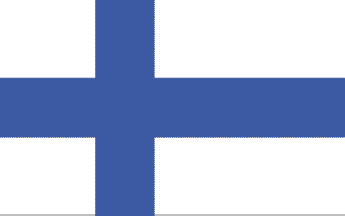
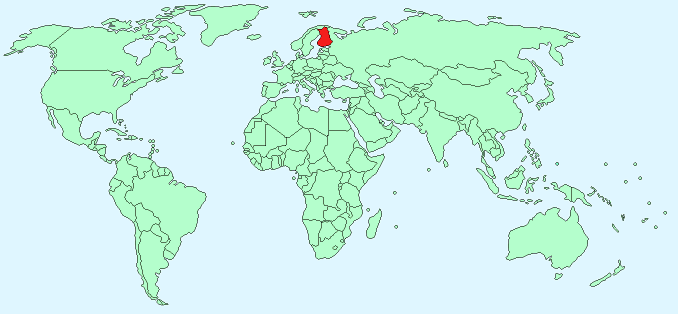
Continent – Europe
Region – Western Europe
Size – 338,145 km²
Geography – flat plains with small hills and lakes
Language – Finnish, Swedish
Religion – 82.5% Lutheran, 15.1% None, 2.4% Other
Monetary Unit – Euro
Natural Resources – timber, iron ore, copper, lead, zinc, chromite, nickel, gold, silver, limestone
Agriculture – barley, wheat, sugar beets, potatoes; dairy cattle; fish
Industry – metals and metal products, electronics, machinery and scientific instruments, shipbuilding, pulp and paper, foodstuffs, chemicals, textiles, clothing
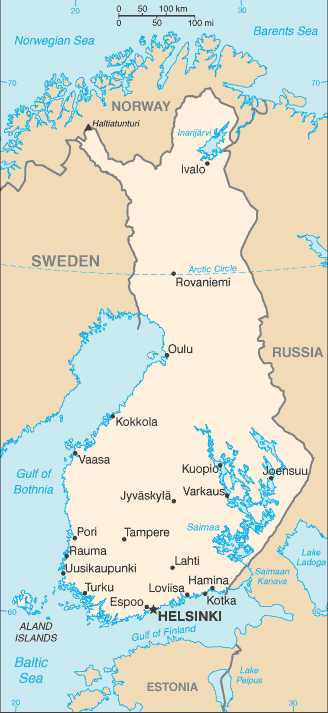
Neighbouring Countries – Norway, Sweden, Russia
Population – 5,268,799 (2014 estimate)
Population Growth Rate – 0.112%
Average Life Expectancy – 79.6
Capital City – Helsinki (621,863)
Highest Mountain – Haltiatunturi (1,328 m)
Longest River – Kemijoki (483 km)
Climate – South and Central region cold, temperate – warm summers 9°C to 22°C and cold winters -10°C to 0° – Northern region cold, Arctic – cool summers 6°C to 17°C and cold winters -18°C to -3°
Yearly Rainfall – South and Central region 70 cm (approx), Northern region 40cm (approx)
Plant Life – pine, spruce, and birch forests, bracken
Animal Life – brown bear, grey wolf, elk (moose), reindeer, red fox, red squirrel, mountain hare, flying squirrel, Arctic fox
Bird Life – white snowy owl, grey owl, swan, capercaillie, willow warbler, chaffinch, redwing
Harvard Reference for this page:
Heather Y Wheeler. (2015). Finland. Available: https://www.naturalhistoryonthenet.com/Facts_Figures/Country_Facts/finland.htm. Last accessed Monday, July 18, 2016
Facts and Figures Pages