
Bulgaria
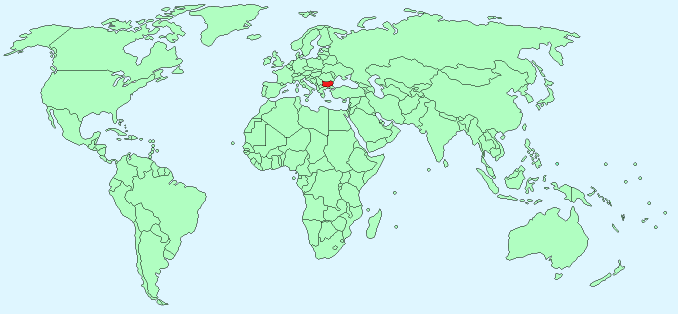
Continent – Europe
Region – Eastern Europe
Size – 110,910 km²
Geography – Mostly mountainous, lowlands to north and east
Language – Bulgarian, Turkish, Roma
Religion – 82.6% Bulgarian Orthodox, 12.2% Islam, 1.2% other Christian, 4% other
Monetary Unit – Bulgarian Lev
Natural Resources – bauxite, copper, lead, zinc, coal, timber, arable land
Agriculture – vegetables, fruits, tobacco, wine, wheat, barley, sunflowers, sugar beets; livestock
Industry – electricity, gas, water; food, beverages, tobacco; machinery and equipment, base metals, chemical products, coke, refined petroleum, nuclear fuel
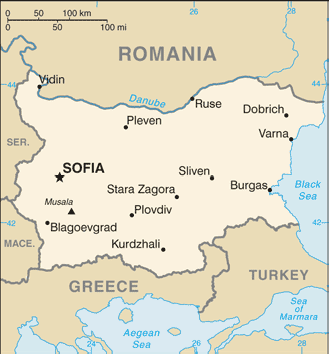
Neighbouring Countries – Romania, Serbia, Macedonia, Greece, Turkey
Population – 6,924,716 (2014 estimate)
Population Growth Rate – 0.84%
Average Life Expectancy – 72.5
Capital City – Sofia (population 1,291,895 estimated)
Highest Mountain – Musala (2,925 m)
Longest River – Danube (472 km in Bulgaria)
Climate – Hot, dry summers – 14°C to 27°C, cold damp winters – -3°C to 10°C
Yearly Rainfall – 65 cm (approx)
Plant Life – Broadleaf and coniferous forest, Mediterranean plants
Animal Life – Bears, foxes, squirrels, elks, wildcats, rodents
Harvard Reference for this page:
Heather Y Wheeler. (2015). Bulgaria. Available: https://www.naturalhistoryonthenet.com/Facts_Figures/Country_Facts/bulgaria.htm. Last accessed Monday, July 18, 2016
Facts and Figures Pages