
Iceland
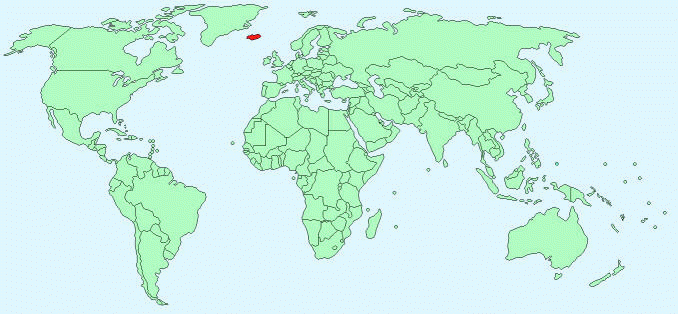
Continent – Europe
Region – Western Europe
Size – 103,000km²
Geography – plateau with mountain peaks, icefields
Language – Icelandic, English, Nordic languages, German
Religion -Lutheran Church of Iceland 80.7%, Roman Catholic Church 2.5%, other 16.8%
Monetary Unit -Icelandic króna
Natural Resources – fish, hydropower, geothermal power
Agriculture – potatoes, green vegetables; mutton, chicken, pork, beef, dairy products; fish
Industry -fish processing; aluminium smelting, geothermal power, hydropower, tourism
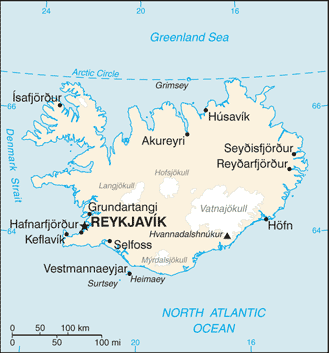
Neighbouring Countries – none (island)
Population – 317,351 (2014 estimate)
Population Growth Rate – 0.65%
Average Life Expectancy – 81.22 years
Capital City – Reykjavík (208,710)
Highest Mountain – Hvannadalshnukur (2,110m)
Longest River – Þjórsá (230 Km)
Climate – mild, windy winters – -2°C to 5°C; damp, cool summers – 5°C to 14°C,
Yearly Rainfall – 457 cm (approx)
Plant Life – ash, aspen, birch, willow, heather, grasses, mosses and 340+ flower species
Animal Life – wild reindeer, fox
Bird Life – eiderduck, ptarmigan, swan, eagle, falcon, and gannet
Marine Life – whales, seals, dolphins, porpoise, cod, haddock, herring
Harvard Reference for this page:
Heather Y Wheeler. (2015). Iceland. Available: https://www.naturalhistoryonthenet.com/Facts_Figures/Country_Facts/iceland.htm. Last accessed Monday, July 18, 2016
Facts and Figures Pages